How to Close More Sales Using the Principles of Mastery
I have coached hundreds of professional sales representatives, and I noticed something important about improving individual sales impact: most salespeople don’t have a closing problem. They have a mastery problem.
They want the result without the process. They want to close deals without putting in the reps that make closing feel natural. George Leonard wrote about this in his classic book Mastery — and while he wasn’t thinking about sales, the lessons apply directly to anyone who wants to get consistently better at the hardest part of the job.
Here’s how to apply them.
Stop Treating Closing Like a Talent. Start Treating It Like a Skill.
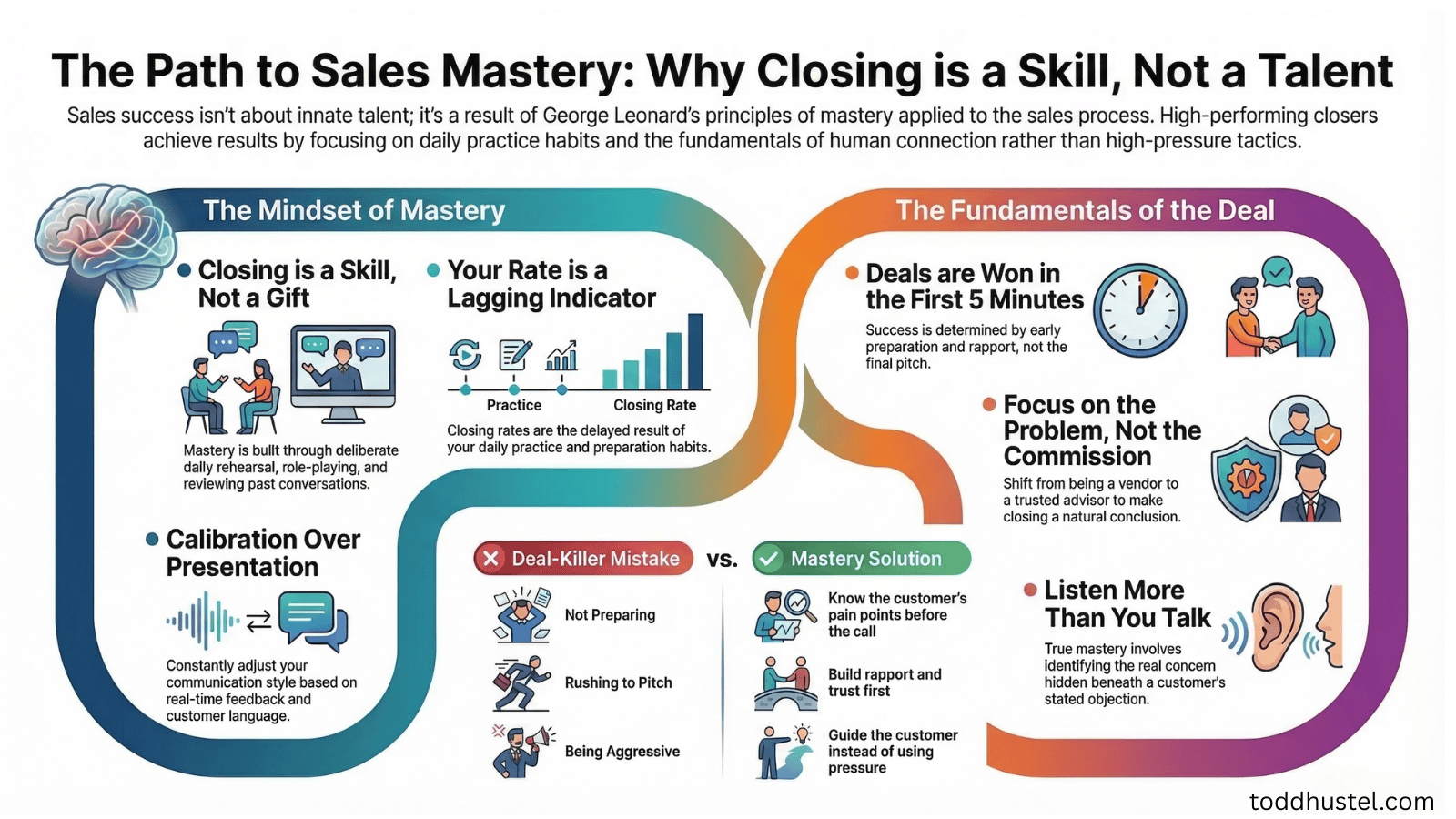
The biggest lie in sales is that great closers are born, not made. Leonard blows that up. Mastery isn’t reserved for the naturally gifted — it’s built through deliberate, consistent practice.
That means carving out time every day to rehearse. Role-play objections. Replay your best and worst closing conversations. Record yourself and watch it back. It’s uncomfortable. Do it anyway. The reps who close consistently aren’t luckier than you — they’ve logged more practice hours than you.
Key Takeaway: Your closing rate is a lagging indicator of your daily practice habits. Change the habits, change the results.
The Five Mistakes That Kill Deals Before They Start
Leonard talks about how most people plateau because they’re repeating bad habits, not building good ones. In sales, here’s what that looks like:
Not preparing
Walking into a call without knowing the customer’s business, their competitors, or their pain points is the fastest way to lose credibility before you’ve earned any.
Making it about the sale
Customers can feel when you’re more interested in your commission than their problem. Shift your focus to understanding what they actually need — the close becomes a natural conclusion, not a pressure play.
Skipping rapport
People buy from people they trust. If you’re rushing to pitch before you’ve built any connection, you’re making the job harder on yourself.
Going aggressive
Pushy tactics might get a short-term yes. They almost never create long-term customers. Guide, don’t pressure.
Disappearing after the close
Following up isn’t just good manners — it’s how you build the kind of relationships that generate referrals and renewals. Stay in the game.
Key Takeaway: Most lost deals are lost in the first five minutes, not the last five. Fix the setup and the close takes care of itself.
Relationships Win More Deals Than Pitches
Leonard emphasizes that mastery is about showing up fully, not just performing. In sales, that looks like genuinely caring about the person across from you.
Listen more than you talk. Ask about their challenges. Remember what they told you last time. Tailor your approach to how they communicate, not how you prefer to present. And here’s the move most reps skip: provide value before you ask for anything. Share an insight. Send a relevant article. Introduce them to someone useful.

When you position yourself as a trusted advisor instead of a vendor, you don’t have to fight for the close. They come to you.
Key Takeaway: Your pipeline is only as strong as your relationships. Invest in people, not just prospects.
Communication Is the Skill Underneath Every Other Skill
You can know your product cold and still lose the deal if you can’t communicate in a way that resonates with the specific person in front of you. Leonard would call this calibration — constant adjustment based on feedback.
Study how your best customers talk about their problems. Mirror their language back to them. Practice your pitch until it’s conversational, not rehearsed-sounding. Learn to listen for what’s under the objection — the real concern is rarely the stated one.
The reps who close consistently aren’t necessarily the best talkers. They’re the best listeners who know when to speak.
Key Takeaway: Adapt your communication style to the customer. The goal isn’t to impress — it’s to connect.
The Bottom Line
Closing isn’t a trick. It’s the result of doing dozens of smaller things well — preparing, listening, building trust, practicing, following up, and communicating clearly. George Leonard’s Mastery is fundamentally about this: sustained effort on the fundamentals is what separates the elite from the average.
The question is whether you’re willing to stay on the path when it’s not glamorous.
Start there today.